Back to the Future (1985) Review

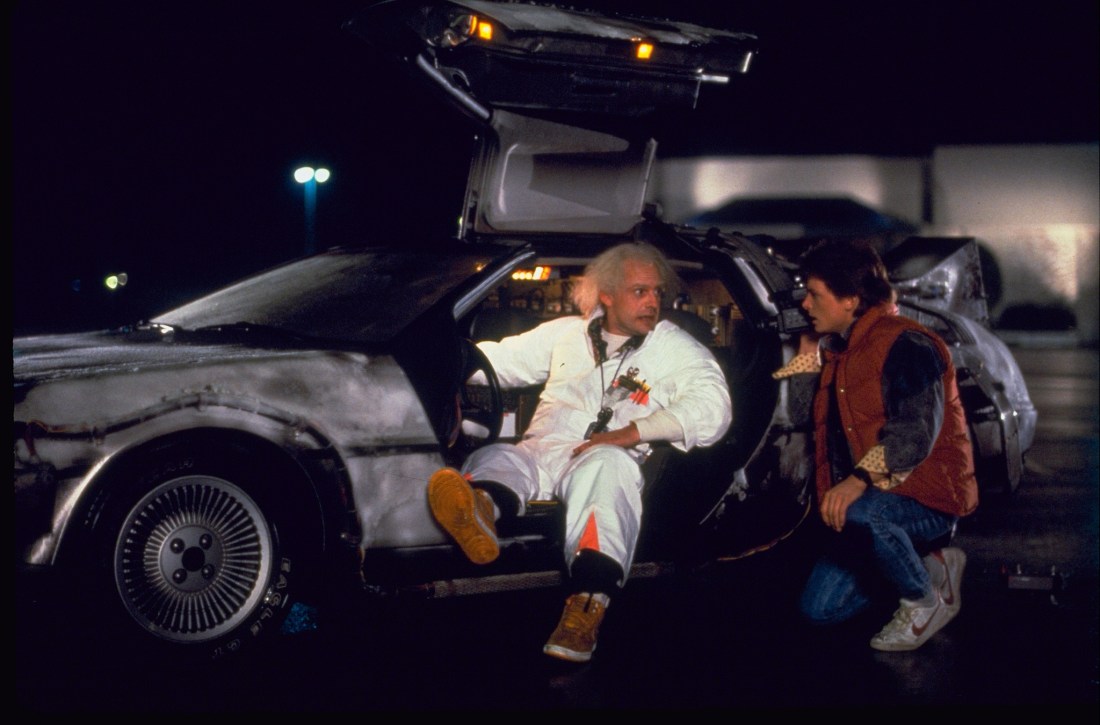
bttf.jpgThis iconic story starts with Marty McFly (Michael J. Fox), McFly is a cool 17-year-old high school student in the 80s… who is best friends with a disgraced nuclear scientist that has ties to a terrorist group. After the terrorists come chasing after Marty, he jumps back into the time machine to the 1950s and nearly hooks up with his mother, but must get his mother fall in love with his father before it’s too late. It’s a bit of a crazy movie I’ll admit, and a really strange inciting incident, but that kind of crazy takes us back to the 1950s. It’s hilariously written when we see the cultures of the 80s and 50s collide with each other. The sets are amazing with people populating the area in their 50s attire. It doesn’t even feel even a bit fake, it feels genuinely real.

The film is so much fun, and it knows that. Never does the film pause for moral revelation, a sad and tender moment, it stays consistently at the same fantastic level throughout. Yet the film does have a tiny bit of heart to it, nothing too much, but it’s there and it just feels natural. It flows without it being forced, the payoff for the moment is great, and it never overstays its welcome. It was just a nice addition to the already great story.

It is in the performances of its five key cast members that add heavily in the film’s playful touch; Michael J. Fox (Marty McFly), Christopher Lloyd (Doc Brown), Lea Thompson (Lorraine), Crispin Glover (George), and Thomas F. Wilson (Biff); they all slip into their roles perfectly, with all taking on distinct swaggers that evokes feelings of envy and laughter within me. This is Fox at his most iconic of roles, and I can see why, from the way he walks or runs from one location to another, his impressive skills as a skater and a guitarist would leave many male audiences in awe whilst the ladies with adoration. Another key standout was Thompson’s performance as the dual-sided Lorraine, who carries the familiar rebellious nature of every adolescent, while upholding a pristine and naïve persona that even had us and Marty fooled; in this film, it shows that she has the ability to carry her own through subtle moments of comedy and without resorting to the self-indulgent melodramatics that could easily be found in such a role.

Character development may not be rich, but it is undoubtedly present, with Marty’s father slowly gaining the self-confidence needed to thrive in life, which parallels with Marty’s own journey, thus leaving us a slightly different boy that he was when he accidently entered the seemingly isolating but curious world of 1955. In Marty’s first-hand experience of his parents’ memories, he develops a sense of understanding towards them; finding sincerity in his empathy and sympathy that compels him to improve their lives, unconsumed by any drives of selfishness that would make his meddling antagonistic.

A significant reason for that is the script, perhaps the greatest triumph of Back to the Future’s many accolades. Zemeckis & Bob Gale craft a very careful, clever piece of work that breathlessly deals with the idea of time travel, pre-destination paradoxes and the moral & physical consequences of changing events past in a remarkably efficient way. It’s a deceptively clever story because while on the one hand it might simply be Marty McFly trying to ensure his parents fall in love so he gets born, it’s dealing with knock on effects and alternate timelines that in lesser hands could have become depressingly complicated and dragged the narrative down, but Zemeckis’ approach is so breezy, so colourful and fun that you’re fooled into forgetting just how good the writing is, simply by the sheer enthusiasm of the piece & everyone involved. Zemeckis equally directs tightly, keeping his story on the rails while delightfully painting a picture of the mid-1950’s & the timeless charm of that era in Middle-America, not to mention tapping lightly into plenty of underlying issues of the day – the fear of the atom bomb, the growing love of science fiction literature, the birth of rock’n’roll & the increasing march toward teenage rebellion that came with it. Back to the Future acknowledges these social factors while never letting them get in the way of the amazing story being told.

It’s ambitious and original. It’s far more ambitious and original than almost anything being produced in the studio system at the time or that has been produced since. It’s complex and multi-faceted – comedy, science fiction, romance, high school drama, musical. It even throws in some terrorists. It’s absolutely remarkable but never, not once, does it ever stop being fun.

There really is so much going on with Back to The Future and it really is deserving of its status as a genuine classic of the 1980s. That it’s still as adored as much today as it was when it was released not far off 30 years ago is a testament to just what a joyous experience it is to watch it at any time. Alright, they might not make them like this anymore – but the important thing is that Back to The Future was made at all. Its easily one of my favourite films of all time and I know it will be my whole life.
Captain America: The Winter Soldier (2014) Review

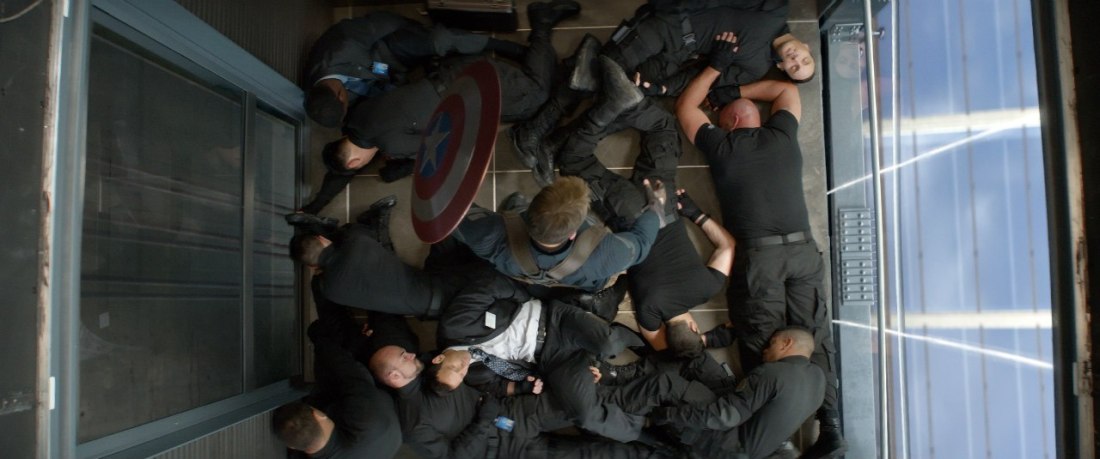
CAPTAIN-AMERICA-THE-WINTER-SOLDIER-Teaser-Trailer-Full-HD-2Directed by brothers, Anthony and Joe Russo, best known for their work in television comedy, Captain America: The Winter Soldier is a film that spins an interesting future for the Avengers cast of superheroes but struggles to tell a compelling story in its own right. Wrestling to find his place in the new world, Steven Rodgers must battle a new threat in the form of the Winter Soldier, a ruthlessly efficient assassin with a mechanised arm. To make matters worse he’s also uncovered a conspiracy at the heart of S.H.I.E.L.D.
I really loved that there was a true feeling of character to Steve in this one, or rather him trying to find his character in this brand new world. Everything is heightened and technology has improved, and you really felt for him as he has to struggle to maintain character yet decide what is right in this new world. Even The actors get plenty of room to breathe, Samuel L Jackson gives his best performance as Nick Fury yet, helped massively by the witty screenplay that gives him many a zinger to play off. Scarlett Johansson fares similarly, settling into Black Widow extremely comfortably at this stage. Chris Evans’ uniformed boy-scout actually sticks well here. New additions to the already amazing cast are also great, from Anthony Mackie’s likeable Falcon to Sebastian Stan taking on a whole new character in the form of the infamous Winter Soldier. Seemingly not given much to do to begin with, he leaves the lasting impression on you; from his cold stare to his swaggering manner, he’s the coolest thing about this movie.

Finally, a solo film from the Marvel Cinematic Universe got the villain right. Actually, let me rephrase that. An MCU film brought a totally kick-ass, shockingly cool bad guy to a Captain America movie. For all the faults of The First Avenger it did hold a personality and even turned an overly serious character into a relatable hero. Naturally, given the move to the present day, a shift in tone was needed but in doing so not only have Marvel quickly turned Captain America into the dullest Avenger but criminally side-lined him in his own film and turned it into a S.H.I.E.L.D movie. Not only that but it is far more interesting for what it means for future films in the Marvel universe than it is as a standalone experience. I think Captain America: The Winter Soldier has possibly become one of my favourite Marvel films to date. There was a great balance of political intrigue and mind-blowing action, with enough room to explore and develop our beloved characters further. You can tell a lot of effort went into creating a great story with lots of emotion, by people who really understand and love the characters involved.

One common complaint about Captain America: The First Avenger was the lack of humour or comic relief. This didn’t particularly stand out to me when watching the first movie, but you can tell the writers have taken this on board for the sequel and have created a good balance of humour, which is used well to relieve the tense moments when necessary but does not take away from any emotional impact.

An essential thing you’ll have to do to fully enjoy this film is having a willingness to accept the predictable unpredictability of the script. It is a bit of an uneven narrative. It handles the darker aspects rather well and actually succeeds in creating a bonkers but fantastic, Bond-esque threat that actually feels palpable and as if there really are things at stake. But on the other hand it handles the intrigue poorly, abandoning opportunities for truly fooling its audience and instead opting for one cliché too many times.

The production offers intense action, well-rendered characters, and exciting visuals. Thrilling and sometimes almost brutal, the Russo’s show soaring action set pieces created to rattle bones. Every punch is firmly felt, and every leap flies. The pacing is swift but yields to moments of intrigue that elevate the entire experience.

The film’s action scenes are well-choreographed and are pleasing to watch but the final big battle somewhat damaged the whole experience, it was too long and the excessive CGI use ruined the good atmosphere of the film for me but overall the action sequences fit in well with the film and the pace. Henry Jackman’s vigorous score successfully captures the spirit of the film and makes it definitely makes it more fun to watch.

This is the movie I always believed Marvel was capable of, the one that would nail the tone and the atmosphere and find a perfect balance of everything needed to tell a great story had finally arrived, and it was directed by the Russo brothers, a couple of comedy guys who seemingly had no business crafting something so cool.

This movie is such a unique piece of the Marvel Cinematic Universe, because I don’t think they will ever get a chance to tell another story with this much of a real world feel to it. I would highly recommend checking out Cap’s second solo movie again, if you are in the mood for an action movie done right.

Entertaining and spectacularly full of action, Captain America: The Winter Soldier is riveting. Combining the narrative stuff of political thrillers with the gripping set pieces of great action cinema, the film is fast, fully-developed, and appealing. Crafted with skill and polish, it is a grand superhero effort.


Carol (2015) Review

60700c6f-1180-49b6-90ac-8e70d7f08826

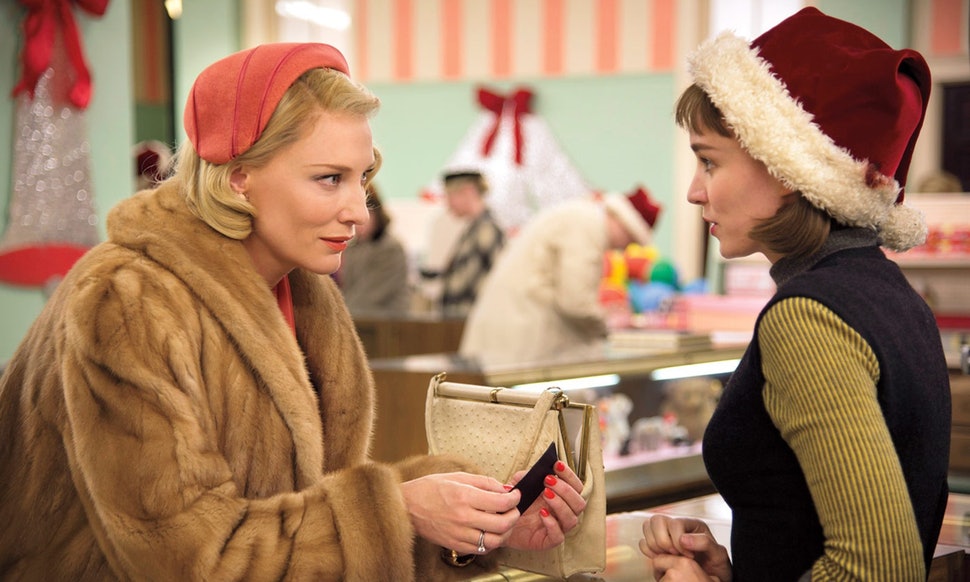
Carol is Todd Haynes’ adaptation of Patricia Highsmith’s controversial 1952 lesbian-romance novel. Carol (Cate Blanchett) is a soon-to-be-divorced housewife from the suburbs of New Jersey and Therese (Rooney Mara) is a young shop-girl who doesn’t know what she really wants out of life. She’s reactive and idealistically explores the world and loves photography. A few weeks before Christmas, Carol enters the shop and Therese is drawn to her. She watches Carol as she examines a child’s train set, one only hours before Therese had childishly admired herself. Then their eyes meet and the torture begins.

Carol intriguingly invokes Brief Encounter with its structure, opening at a future point in time and swirling its way back there, so when you see the opening scene with the knowledge of the film it is an achingly, heartbreaking brief hand touch of a sequence. You have to applaud Haynes, because invoking Brief Encounter, one of the best films ever made, is a brave thing to do, but it is done perfectly.

Blanchett acts with such purpose and fragility, in every scene her eyes show the true focus and you genuinely feel as though she deeply understands her character. She dominates the chemistry between her and Rooney Mara; but that’s not to say Mara is lacking in any way. Her performance is more understated and gentle, and goes beyond just serving the film.

Sarah Paulson is also great as playing Carol’s childhood friend and past lover. Although it wasn’t vital to the storyline, more exploration and development on the relationship between Carol (Blanchett) and Abby Gerhard (Paulson) would have been fascinating to explore. Although it will never happen, there could be a prequel to Carol, just about these two women because I feel it is sitting on something truly fascinating and defining of the period.

The film really plays on the chemistry the two lead actresses have together and I was just so swept with every scene they have alone together because it just feels so intimate! The themes of society telling them they can’t be together is prevalent in this film, but it is never the focus, it is simply a great coming of age romance between two people discovering themselves.

Todd Haynes has long been a director correlated to the LGBTQ community. His earlier film Far From Heaven features a similar exploration of forbidden love by a homosexual man in the 1950s. Carol subject matter obviously mirrors this in a lot of ways but his nods to members of the LGBTQ community and his care for them are admirable. Todd Haynes has been known for crafting beautiful imagery in his films, and it’s strikingly apparent in how Carol feels like a time capsule of its era and social climate.

The screenplay, by Phyllis Nagy, is smart, no character is outright evil, all are sympathetic and have their own problems. It’s so well done it’s easy to forget how progressive this film actually is. An LGBTQ+ film where the prejudice, the ‘quirky’ or ‘different’ aspects of such a relationship in the 1950’s etc. are not the sole power of the film, rather just their wonderful relationship and the obstacles they have to overcome.

The film is shot by Haynes’ usual cinematographer, the incomparable Edward Lachman. It’s shot in dark hues with bursts of saturation. It’s pure poetry. The production design and costuming aid Lachman’s already marvellous capturing of the 1950s. Haynes and Lachman captures the cold, distant nature of the time and thus of their relationship by keeping the intimacies far away. This distance is captured even more with Lachman’s use of blur and out-of-focus shots and it’s retracting to and from. Filmed in grainy 16mm with a somewhat muted colour palette, one has the sensation of going through old love letters and faded photos, total immersion in the time period and the melodrama.

As the film progresses not a lot happens, at least as much as traditionally one would suspect. It’s not an over-dramatic melodrama but there are stakes. The story is contained. It feels risky to keep it so contained but just as risky not to as well. To over-dramatise makes it unreal, to under-dramatise makes it realistic, makes it the 1950s

The editing is, aside from the revisited dinner scene, linear though incredibly well done both narratively and tonally. The progression of shots and the sequencing are reminiscent of memories, how, when recalling something you don’t remember exactly what it looked like, it could be blurry or out of focus, but the feeling is there. The cherry on top of the film is the score. Carter Burwell’s score hits all the right notes and truly highlights the setting and feelings of the film. This is a very cozy and warm film. The main theme is used lot but whenever its used it announces an important moment and is used very cleverly, I love the main theme, it’s a great piece of music. The rest of his score is fantastic and compliments the atmosphere very well. I liked how this film also features pre-existing songs from the 40’s and 50’s. Whenever those came on, I had a big grin on my face because it complimented the film very well.

Carol absolutely blew me away the first time I saw it, and it still holds up for me and even seems a better movie every time I re-watch it. It is filmmaking of the absolute highest order. For putting all of these incredible aspects together, and with some of the best direction I have ever seen, Todd Haynes makes what would be a charming love story into one of the greatest love stories ever told and one of the greatest films of not only the year, but is defiantly my favourite of all time. It’s everything I love about film, that it can take you to other eras, but also different dimensions and worlds that you would think only exist in dreams. Carol does both, and I am so thankful that it is real.


Les Misérables (2012) Review

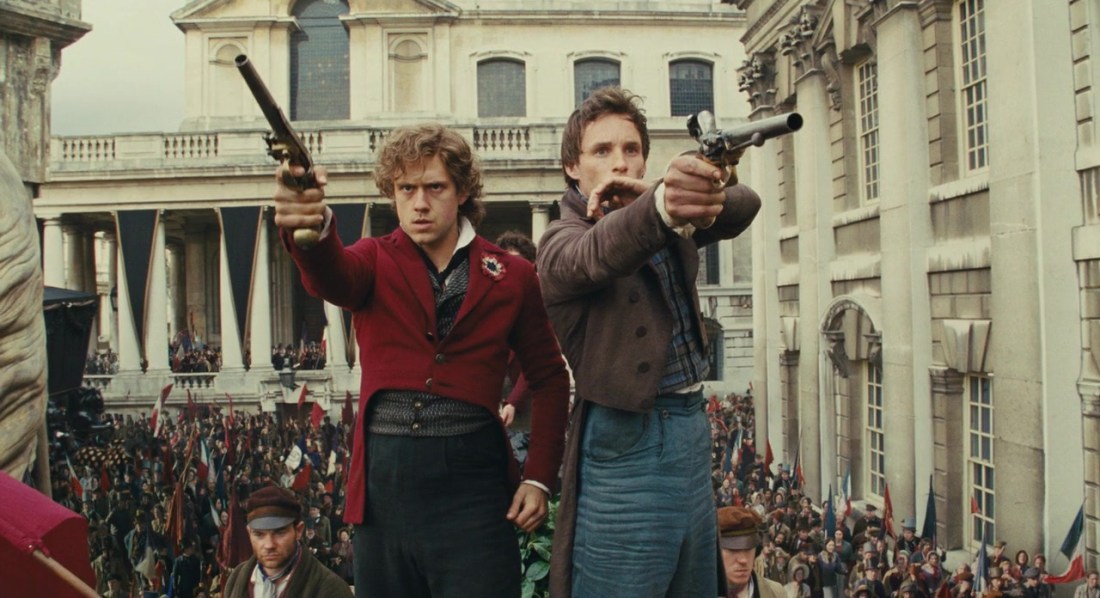
vVzoPjSDirector Tom Hooper decides to take on an adaptation of the successful stage musical based on Victor Hugo’s classic novel set in 19th-century France. Les Misérables is a story set during the French Revolution and starts with Valjean (Hugh Jackman) in jail for 5 years because he stole some bread to save his sisters son with an additional 15 years because he tried to escape the law. Based on a French historical novel by Victor Hugo, first published in 1862, this novel has been turned into an award winning musical, with this film being just one of the renditions made. With stars like Anne Hathaway, Hugh Jackman and Russel Crow star this film gained a lot of attention prior to its release and had a lot riding on its success.

Being a musical, the first thing any fan hopes for is genuine singing that is full of emotion, and it delivered. All of the singing was recorded on set during the actual scenes when they were acting. The fact that it’s recorded on set as opposed to a recording studio means you are not getting the best possible vocal performance, but the emotion that it adds to the film is unreal, it’s what makes the film and the individuals acting Oscar worthy. Having Anne Hathaway crack a little on a note because her character is emotionally destroyed is ever much more impactful to me as a viewer then if she had sung perfectly or auto-tuned. It’s one of the reasons I think this is possibly Hathaway’s best performance of her career.

Hugh Jackman might have surprised me more than even Hathaway, even though his Broadway credentials clearly show his performance should have surprised no one. Russel Crowe is impressive as well. In the second half of the film we got to see the next generation in the film and in turn, a new generation of actors. Eddie Redmayne and Amanda Seyfried are both equally spectacular in their singing and acting but are still not on the level of Jackman and Hathaway, especially after Hathaway’s delivery of ‘I Dreamed a Dream’. The cast is what holds this film together, it’s a Pulp Fiction-tier cast.

Helena Bonham Carter and Sacha Baron Cohen bring in some much-needed comedy, as their characters really help to lighten the mood between constant scenes of despair, and they are absolutely hilarious every time they are on-screen together. What will really break your heart, though, is the relationship between Eddie Redmayne, Samantha Barks and Amanda Seyfried, who bring in the romantic side of the story. Eponine (Barks) is an amazing character, as it’s not often that you get to see a character from her own point of view. Her scenes bring a sense of reality and pure passion to the somewhat unreliable situation that the cast are in.

The production design is absolutely impeccable as it creates early 19th-century France, and right from its opening scene of hundreds of men hauling a ship into a dock, you know you’re watching something unprecedentedly massive. It’s not afraid of its size, and for an epic these days, it’s admirable.

And the cinematography by Danny Cohen seamlessly complements the harsh world of the poor France and the grand scale of the epic tale, using both crane shots and extreme close ups to do both.

Nevertheless, the editing was woeful, cutting every two seconds, only keeping too much attention on single shots of the singing performances while doing the minimal to establish scenery. The direction from Hooper is sloppy and lazy in parts. Still, you can’t fault it for the sheer look of the film because it looks gorgeous. The individual plot lines rub against each other but never really mix except for a few instances.

The addition of comedy and romance work amazingly well against the already compelling but deeply rooted story of hope and redemption, giving something for everybody to take away from the film. What draws you in even more, however, is the larger performances where whole groups of the cast come together. These songs work incredibly to make the audience feel a part of the revolution itself, especially with the final rousing chorus of “Do you hear the people sing?” This is a key quality of the film, completely drawing you in to every character and situation, as you are made to feel both uplifted by their actions but also drawn to tears because of the consequences. The nearing on three-hour length was almost a drag, but whilst it felt like you had seen the whole lives of these characters during these – although compacted – three hours, the length works as more of a positive as you are able to engage with the characters entirely. I thought sitting through the second half would allow to see a satisfying conclusion to Jackman and Crowe’s lengthy cat-and-mouse game, which is fairly arresting in the first half. But sadly even that great storyline whimpers in the latter half, ending unsatisfyingly after losing all its steam.

Either way, there is a great movie inside this, but it’s way-way too long for its own good and has no sense of pacing which makes a lot of parts in the film exhausting. What made me thoroughly enjoy the film was the overall focused directing, terrific acting, the beautiful songs, and the wonderful cinematography.

Les Misérables is heart-breaking, powerful, and inspiring. It is a triumphant film and an ideal cinematic visualisation of its West End/Broadway predecessor. It is, most importantly, one of the best movie musicals of the last 25 years, if not longer and it adds so much to the musical film community.

At two and a half hours of non-stop singing and its fair share of misery, this could be a bit much for some. But for me it is a remarkable achievement and a rewarding experience. By the end scene I was captivated by sorrow and joy as one, and if a film can do that to me then I class that as an amazing film.


Little Miss Sunshine (2006) Review

COVER-1140x660-39On Jonathan Dayton’s directorial debut, he tells the story of Little Miss Sunshine which follows a dysfunctional family, who are forced to go on a road-trip to California after their daughter was qualified for “Little Miss Sunshine” beauty pageant. Along the trip they all face with all kind of personal problems and finally learn how to be a team, a family. The story seems simple; I would even say cliché but the driving force behind this film would be concrete solid script which gives us pretty relatable characters. All the six characters get runtime and space they need and not a single one feel underdeveloped. Featuring such an outstanding cast, start with Abigail Breslin, Toni Collette, Steve Carell, Paul Dano, Greg Kinnear to Alan Arkin all give powerful strong performances (The centre of all would be Breslin) and we even got to see Breaking Bad duo Bryan Cranston and Dean Norris in small roles.
Little Miss Sunshine is a funny and emotional movie all about failure and working together as a family. Each character has a flaw, it’s not directly clear if they overcame it but in the end the family all work together showing it’s okay to not be great and to fail. This message is great- in our society now where everything it relies on winning, then this mind-set makes the person who didn’t win feel socially excluded or a let-down; but this film shows it’s okay to fail as long as you tired. You don’t lose when you fail- you learn. You only loose when you’re too afraid to try. This message is what makes this film very special. All the characters are written with great care, they are all comedic and sometimes serious. The film has some heart-breaking scenes that are performed so well by the actors- it just feels so real. You can find something new to love about this film whenever you rewatch it. Truly worthy of its four Oscar nominations and two wins for Best Original Screenplay and Best Supporting Actor.

The whole film feels like it was put together with so much care and love. Frank (Carell) has tried to kill himself, as we find out in the first scene, and never pushes the broken down car with his hands because it would hurt his wrists too much. Olive (Breslin) holds on to the eye tests for an eternity of screen time just so they can be used later. In this sense the film is very clever and the script works very well along with the acting.

The performances across the board are really great, apart from Greg Kinnear as at points it seemed like he was trying to channel his inner William H. Macy or something, but he just came off as very wooden and uninspired. Carell is, unsurprisingly, a standout, while Dano and a young Abigail Breslin are also great. Abigail Breslin gives one of my favourite child performances ever. She radiates love, making it easy to love her back. Olive is one of my favourite characters in a movie: sweet yet daring, innocent but fearless. I think a small part of me wishes I was more like this tiny girl who is living a fuller life than I probably ever will.

But, it’s not just Breslin that makes the movie. Each and every actor gives so much to their roles and makes the characters they are portraying immensely complex and emotional. I would start listing them off, but it would be unnecessary because I’d just say them all. The whole cast is stellar.

I didn’t laugh as much as I wanted too, but Michael Arndt’s screenplay is still very solid. There are some very weighty issues arisen now and again, but the film never feels to bogged down in the moral gloom of its situations, taking a more casual approach. It’s a light watch, and easy to sit through, perhaps a little too easy however as the film relies on the character development, at times, the cinematography isn’t focused on enough. However, some of the cinematography and camera-work had great care put into it with some visually stunning shots, but not enough to allow the audience to focus on the cinematography.

There’s a lot to be said about the details in this film. The little ways in which each character is introduced. Each of their defining characteristics that create a trope that we constantly follow, except it doesn’t feel forced. Everyone has things they are known for and this movie is no different. They are three dimensional people with a one dimensional view of themselves.

This movie captures dysfunction like nothing else I’ve ever seen, and within the first few minutes of the movie, you already feel like a part of the family. Major issues such as depression and drug abuse are presented in a very real way with no sugar coating, which invokes introspection while watching. The perfection in this movie comes from the realisation that no one is completely perfect. Little Miss Sunshine represents how amazing a comedy can be, and is definitely a film that I will be remembering.

The Outsiders (1983) Review

the outsiders

After the immense success of The Godfather and Apocalypse Now, Frances Ford Coppola decided to bring an adaption of The Outsiders, a novel by S. E. Hinton, first published in 1967.

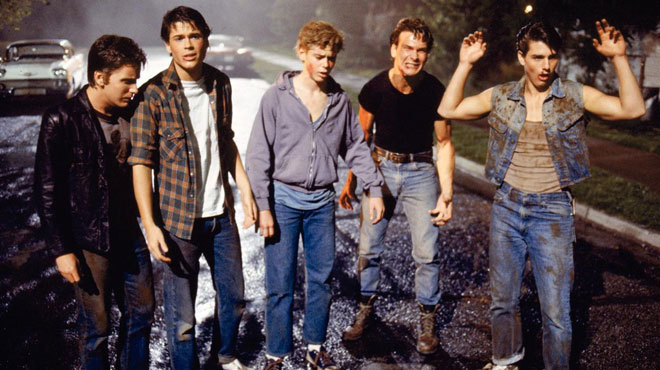
The Outsiders is about a rich gang ‘The Soches’ and a poor gang ‘The Greasers’, this story follows The Greasers and how they get tangled up in a kind of gang war with The Soches. The story starts with The Greasers killing one of The Soches and the story shows how The Greasers deal with this. The young all-star status of the cast is interesting, seeing many people who hadn’t really broken out into their careers yet. With stars like Matt Dillon, C. Thomas Howell, Ralph Macchio, Patrick Swayze, Rob Lowe and Tom Cruise you would expect the acting to be amazing but as these stars are at the beginning of their careers and the film relies purely on them, the acting is average at best. Id also like to add I have no idea what’s up with Tom Cruise’s awful southern accent but he’s barely in the movie so it’s not too bad.

There’s an underlying feeling of the characters being eliminated despite strong directorial skill from Coppola prevents any form of attachment with them. Whilst the film feels gritty and authentic despite being heavily abstract, the film comes across as slightly overemotional and quite dated from the modern viewer that I am. The uneven storytelling is frustrating as the broad cast of characters are awkwardly mismanaged with hardly any time given to the character development, there could have easily been allocated more time to this factor as films like these rely on characters. It seems like Coppola may have played it too safe here, had he chosen to get to grips with the deeper meaning of the film, the characters, then a less sugar-coated movie might have been made.

This movie definitely feels rushed compared to the book. They left out a lot of important things for the sake of time but what Coppola left out could have added to this movie. The acting is only viewed as bad because of the awkwardly written script and rushed scenes. For a book that does remarkably well with characterisation, the movie feels ridiculously lacking in that, and there isn’t much of an excuse since the first scene establishes that Ponyboy (Howell) is writing this out.

There are enjoyable moments however, C. Thomas Howell as Ponyboy Curtis is the heart and soul of this coming-of-age story, the relationships with his struggling family and friends the most captivating aspect that, given stronger focus could have made the film better. The 50s drive-in inspired aesthetic and allowed the characters to come into themselves and made the viewer understand them more.

Ultimately the film is about children forced to grow up far too early, and their innocence shows their underdevelopment and how they are being forced into roles they aren’t ready to fill. There are a number of moments that hammer this home, like when ‘Two-Bit’ (Estevez) sits down in front of the TV with a chocolate cake and a beer in his lap to watch some Mickey Mouse. This juxtaposition of childishness and adulthood is symbolic of the broken world they live in, where adults are all but entirely absent, and children survive by going to war against each other. The reading of Johnny’s (Macchio) letter at the end is heart-breaking. His remarking that he’s glad they saved the schoolchildren from the fire because they have “more to live for” than he does is chilling as Johnny is only sixteen.

Coppola must be praised for his inventive camera work in this film as without it he may as well not have been there. Whether someone is running across a field and the camera pans along with them or gentle still shot lingers on an emotional moment, Coppola always frames every shot to perfection. Practically every second of film can be taken out of context as celebrated as one of the most iconic pictures in cinema. The whole movie is visibly gorgeous. The scene with the sunset shining on Ponyboy and Johnny’s faces while they appreciate nature is one I’ll remember forever, their silhouettes and monologues are burned lovingly into my memory.

Personally I hate the soundtrack, so many of the songs felt out of place with the tone of the scenes and the movie overall, during sad scenes I wanted to feel the emotion of the characters and that was impossible with Elvis singing in my ears. A more instrumental score would have fit the movie better than throwing in a bunch of Elvis songs and rockabilly tracks that were just tone-deaf in comparison to the scenes they were supposed to compliment.

I can’t say I hate the movie, it’s still an incredible tale of social class and growing up with tough decisions like loss and loyalty. Coppola may not have been the best choice for director, as I can’t help but feel someone else would have brought a more unique spin on the story and given these younger actors better direction. If this movie weren’t so iconic, I’d say it could stand to be remade just to do the book more justice, but at the same time I’m not sure if I could imagine this movie any other way.

Baby Driver (2017) Review

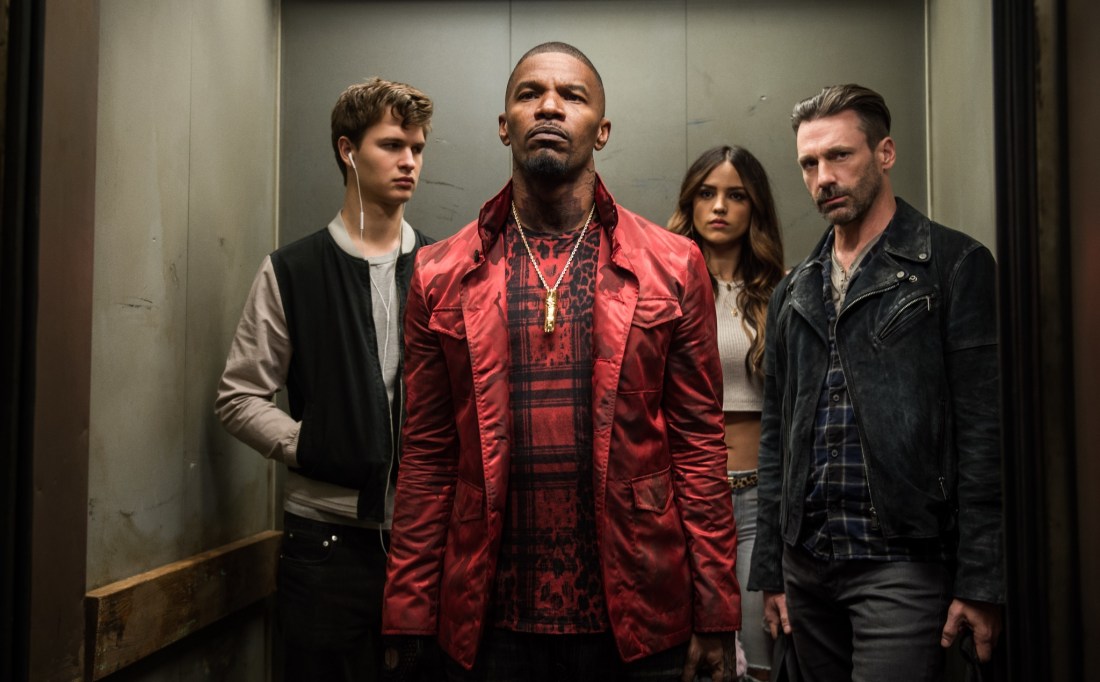
Ansel Elgort;Jon Hamm;Eiza Gonzalez;Jamie FoxxEdgar Wright strikes again! The director of Shaun of the Dead and Scott Pilgrim vs the World appears again with a romantic musical thriller. The synergy of the music is what makes this film so special, it has Edgar Wright written all over it. “A film by Edgar Wright,” the credits casually announce as the opening sequence finally screeches to a halt. To which you find yourself replying in your head ‘no kidding’.
Ansel Elgort plays Baby, a young getaway driver who works for big Atlanta crime boss Doc, played by Kevin Spacey and has a sad past with both his parents fatally dying in a car accident, this means that Baby can’t drive without blasting music into his ears, making his co-workers question his sanity. Baby’s job is a dangerous one, but one he has to take to pay off his debt to Doc (Spacey) but when he meets Debora (Lily James) his world completely changes. The films supporting cast is the films biggest strengths. The boss (Spacey) is menacing but also oddly cares for Baby. Bonnie and Clyde’s doppelgängers, Buddy and Darling, are played by Jon Hamm and Eiza González, they have a very loving relationship but if anyone looks at Darling in the wrong way buddy will not stand for it, and finally Jamie Foxx plays the hard-nosed Bats. This star studded cast adds a lot to the film, these potentially disposable characters are the glue that holds the film together.

Baby is always ‘one job away’ from freedom as he cares for his blind foster father at home, storing away his money so he can seemingly use it when he gains his freedom from Doc, the only certain thing in Baby’s life is that he is in love with Debora, a waitress that he meets in a diner, they hit it off straight away because they both have a love for music they don’t reveal much about their lives to each other but they both know they are right for one another the second they see each other, Baby decides he has to make a move to get out of this life of crime and when he does it all goes downhill for him. The films storyline isn’t too complex but is a good one.

The first two scenes were the best through the whole film, easily. The opening chase, then Baby bopping down the street on his way to the rendezvous—are somewhat better than the rest of the movie, the comedown from the opening two scenes puts a downer on the viewing because this pace is expected throughout the film and will disappoint you if you believed it would. There are parts of the film where the characters don’t fully follow their initial motivations which is confusing but by the end you gain an understanding of why.

One thing that is particularly brilliant is the soundtrack. I love the use of classic songs in films, and here it’s no different. Baby’s iPod library consists of such works by artists like Queen, Focus, Barry White, T-Rex and The Beach Boys. For me, it’s one of those elements that add a certain character and charm to the movie that I feel prevents it from being just another run-of-the-mill action flick, aside from its characters and direction style. Speaking of which, Wright’s frantic style is distinguishable more than ever, he uses his usual supply of tracking shots, quick cuts and sleek cinematography. The action, from the car chases to the gun-play is very well shot, with every cut being done in perfect coordination with the music. Wright’s love of pop culture also shows, with nods to films like Austin Powers and Monsters, Inc, as well as a genuine love of classic car chase films.

One negative about the film is the sexism, I wouldn’t usually bring this up but it is quite blatant in this film, there are only two female characters in the film and are both somewhat disposable characters. Debora (James) and Darling (González) are both the girlfriends, yes Darling is a strong character and does not need saving but Debora is your typical damsel in distress, she is the target of the evil and she needs a hero to save her, although the film doesn’t play on this too much there is still that aspect throughout the film.

For the most part, I’d say it’s one of Wright’s best films in years, easily tied with Hot Fuzz as my favourite of his films. You may like it; you may just pass it off as an over-stylised mess with too much hype. However, I loved it from start to finish. A stylish, quirky and brutal thrill-ride that’s some of the most fun I’ve had at a cinema this year.

Without being the most amazing film, it’s definitely the most entertaining film of 2017. This film is maybe the broadest Wright has ever gone with character and undeniably the most strained he’s ever been with genre, but also the most committed he’s ever been to the raw energy of a piece… Baby Driver isn’t as clever and funny as Scott Pilgrim or as personal and moving as The World’s End, but it’s very fun. Edgar Wright had the idea for this film sitting in his bedroom listening to the song ‘Bellbottoms’ around 22 years ago, and it’s clear to see this is Wrights passion project, and I’m sure glad he kept this idea in his mind for so long!

Stronger (2017) Review

stronger

David Gordon Greens new film Stronger shows a man’s life before and after the catastrophic event of the Boston Marathon Bombings of 2013. Much like Peter Bergs Deepwater Horizon and Patriots Day, this film presents the tragedy not too soon after the real event, forcing viewers to relive these life changing events, this allows real emotion and feelings for the viewer, and is filmed, written and acted very well.

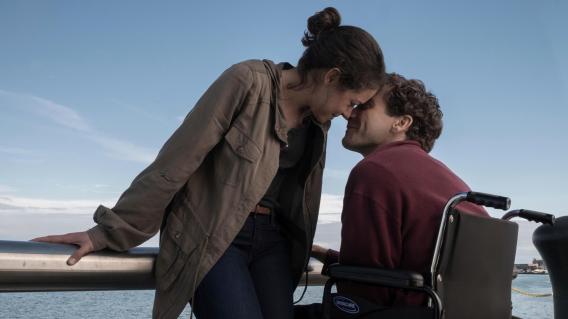
Jake Gyllenhaal takes on the role of Jeff Baumann, a wounded survivor of the Boston marathon bombings, who lost both his legs. Gyllenhaal’s effortless performance is one to remember, much like his emotional performance in Ang Lee’s Brokeback Mountain, Gyllenhaal takes on this role with poise and precision. Jeff Baumann is a flawed man, with failed relationships, an addiction to alcohol and self-medication issues, but with a loving and complicated family. The humour in the film therefore comes from Jeff’s family, Green allows the viewers to relax and hopefully see aspects of their own families in this humour. Jeff’s on/off girlfriend Erin, played by Tatiana Maslany, and she is almost used as a tool for Jeff’s redemption and a target for his recovery. Despite the trailers for this film presenting it as a romance, this film is more of a redemption film as the romance is used for the redemption of a character.

The issue that the loving character of Erin has with on/off boyfriend Jeff is that he never shows up, so to redeem himself Jeff goes to the finish line of the Boston Marathon to see Erin finish the race, and if you know anything about the bombings of 2013, you will know the bombs are set off at the finish line. From this point on, Jeff’s life will change forever. Characters like Jeff’s mum, Patty, gets carried away with the fame her son receives and pushes him too far which then fires up a time honoured argument between the girlfriend and the mother in law, who saw that one coming! The way Green has positioned these characters is excellent, as a girlfriend Erin is stuck with how to treat her incompetent, but injured, boyfriend, she holds her temper through the whole film, but she has to let go at some point and explain she can’t keep being the easy going girlfriend and accepting the way Jeff treats her in his frustrated moments. Tragedy reveals the good and the bad in people and Green has shown this throughout the film in a very clever way.

This film stops itself taking a political stand by avoiding any in depth information about the attack, however we do get to see the utter euphoria when Jeff’s family are informed that one of the suspects for the bombing has been killed. The gritty horror of the accident is barely shown and when it is shown its shown through Jeff’s flashbacks of the day, the film is way too busy with the emotion and the redemption of the characters to show the gore of the accident. The film lingers in the right moments and is willing to do this without showing the dismissing pain.

Green allows the film to be a genuine true story and focusses on themes like strength, perseverance and failure. Instead of a generic true story film, what we get is two incredible performances from two actors that have shown their talents before in Nightcrawler (Gyllenhaal) and Orphan Black (Maslany), these two actors help define this new generation of acting in film and TV, if you think this is a dramatic statement then you clearly haven’t watched Nightcrawler or Orphan Black.

The second half of the film has some amazing scenes all thanks to Gyllenhaal and Maslany, Gyllenhaal’s interpretation of PTSD is refreshing compared to other films portrayal of the mental illness but in my opinion the most harrowing part of the film is at the beginning when Jeff wakes up in the hospital, his confusion, the worry and the endless waiting for his family, another horrifying part of the film is when the doctors take his bandages off, in the frame there is Gyllenhaal and Maslany and in-between their stare is the painful bandage removal, to be able to see the pain and horror on the couples faces and the bandage removal, allows us to recognise the hell these two people will now go through, and the pain they will go through in their everyday lives.

Stronger could have been cheesy and overly sappy, instead it turned out to be something that is very impactful and heart-breaking to watch. Gyllenhaal acts with his eyes in this film, if the film was purely just a shot of Gyllenhaal’s eyes, Jeff’s story would still be told. Green has made a chillingly intimate true story come to life and has created a great script which has allowed Maslany and Gyllenhaal to throw Oscar worthy performances at this film.